


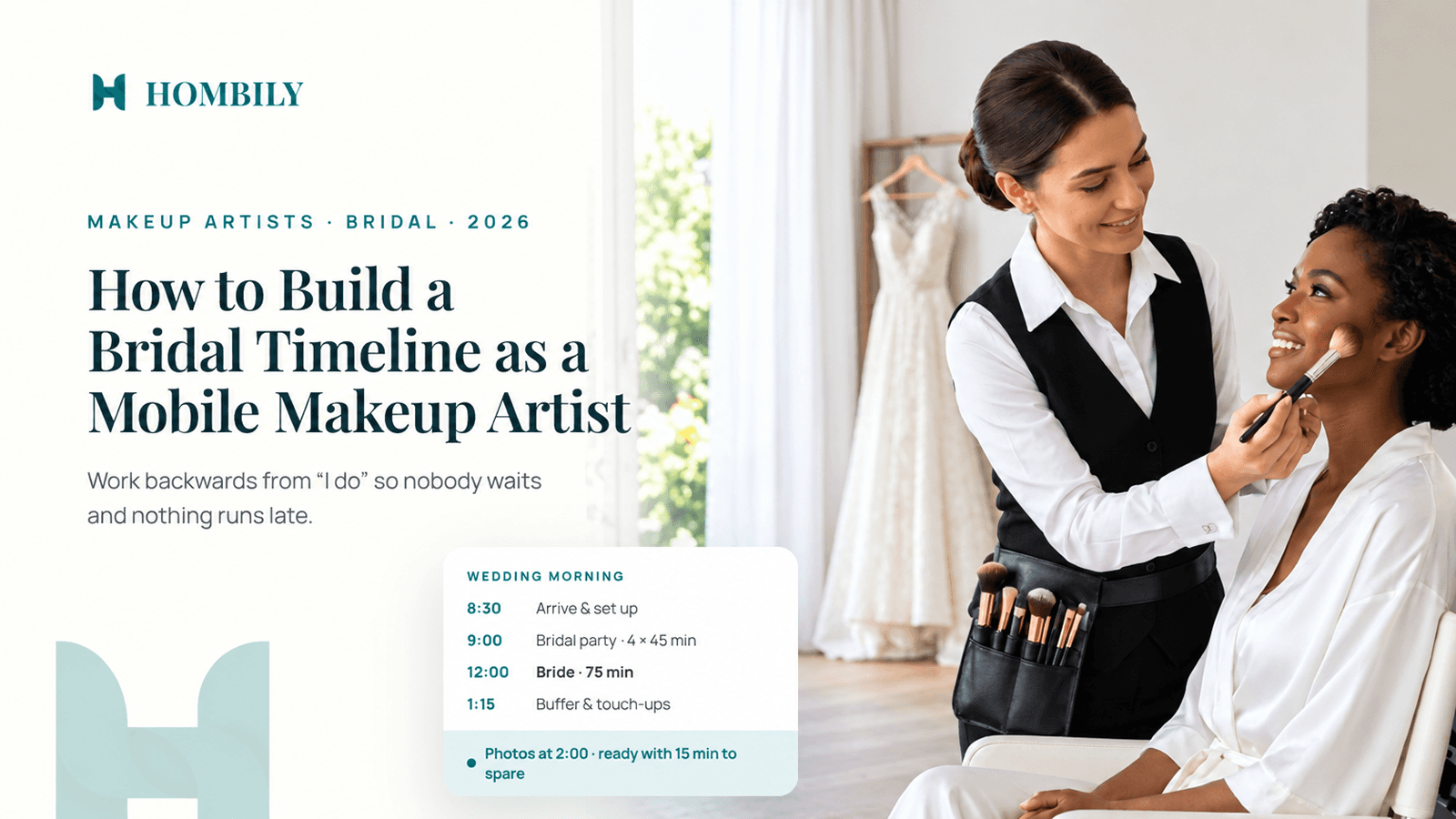
Build a bridal timeline as a mobile makeup artist: work back from photo-ready time, plan travel and setup, and confirm a clear schedule with your client.
As a mobile makeup artist, build a bridal timeline by working backwards from the bride’s confirmed photo-ready deadline, then allocating appointments using your own service records. Add travel, arrival, setup, cleaning between clients and packing as separate tasks; a makeup-only schedule leaves essential work unaccounted for. Confirm the order with the bride, hairstylist and photographer before sharing the final schedule.
TL;DR
Your bridal timeline needs to protect the finished look and the working day behind it. A beautifully ordered appointment list still fails if the room is inaccessible, the bride is having her hair done elsewhere or the photographer needs her before makeup is finished.
Hombily connects customers with independent professionals for at-home beauty and wellness services. For bridal work, keep your own scheduling decisions explicit rather than assuming a marketplace connection settles the day’s logistics.
The useful deadline is when the bride must be ready for the next activity—not simply when the ceremony starts. For a wedding in 2026, confirm that deadline against the current photography, dressing and departure plans rather than copying an older wedding schedule.
Start with confirmed commitments, calculate the work you need to complete, then test whether the proposed morning actually fits. Use this sequence before promising a start time.
Do not reverse this process by accepting a convenient arrival time first and squeezing the service list into the remaining morning. If the work does not fit, change the plan before confirming it.
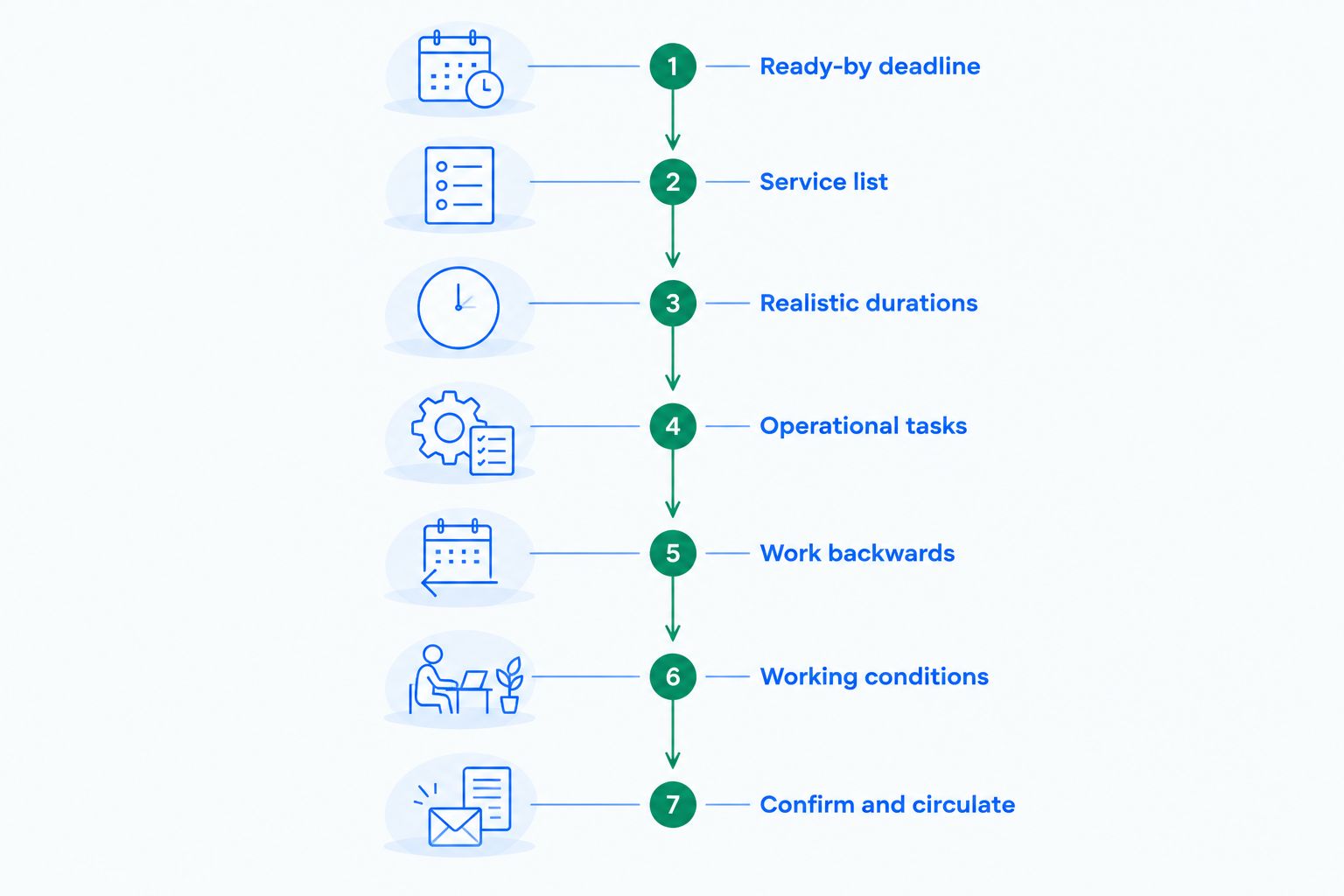 Confirm the deadline and workload before promising an arrival time.
Ask the bride what happens immediately after makeup, then check that answer with the relevant supplier. Photography, dressing and travel are different commitments; treating them as interchangeable creates an avoidable gap in the plan.
Use direct questions:
Record the agreed makeup finish separately from the ceremony time. If different suppliers give conflicting instructions, ask the couple or designated coordinator to resolve them before you issue the final version.
Your 2026 bridal intake form should distinguish these milestones rather than offering a single field labelled wedding time. That distinction makes the schedule easier to check and avoids asking the bride to interpret your assumptions.
Your schedule should reflect the service you actually deliver. Use comparable appointment records, noting where time went rather than remembering only the application itself.
Look at consultation, skin preparation, application, finishing and the handover to the client. Record cleaning and resetting separately when those tasks sit between appointments. This gives you a clearer basis for planning than copying another artist’s published timeline.
Do not use an unfamiliar look or an unconfirmed service as the basis for a fixed finish promise. Clarify the scope first. A bridal trial, where agreed, also gives you an opportunity to record the application sequence and discuss adjustments before the wedding.
Keep timing observations in your 2026 service notes so future schedules reflect your current process. If an appointment runs differently from the plan, record the reason: a changed look, a late arrival and a workspace problem call for different corrections.
A solo artist and a coordinated team need different timelines. Decide who is doing the work before finalising the appointment order; adding a name to a supplier list does not establish workable capacity.
| Working arrangement Best for Practical advantage Constraint to resolve | |||
| Solo artist | A service list that fits your confirmed working window | You control the application sequence and client handovers | Your appointments cannot overlap |
| Coordinated team | A service list requiring genuinely parallel appointments | Separate artists can work on different clients at the same time | Each artist needs an agreed scope, workspace and schedule |
Neither arrangement removes setup or cleaning. A team also needs clear responsibility for each client and agreement about who handles changes.
If the solo schedule does not fit, discuss a revised service list, a different start or additional professional support. Do not promise another artist’s participation until that arrangement is confirmed. Where someone else performs the work, make that clear to the client.
A bridal timeline changes when the work, access or dependencies change. Check these factors for each booking rather than treating every wedding morning as the same assignment.
Treat a change to any of these factors as a reason to review the schedule. An extra appointment is not just another name on the document; it needs a service slot and the surrounding operational time.
The bride’s place in the order should follow her ready-by deadline, hair plan and photography commitments. Automatically putting her last can leave no workable space for dressing or portraits.
Ask when the bride needs to leave your chair, not just when she prefers to begin. Then check which other clients are genuinely available around that appointment. Someone who is travelling to the venue or helping with preparations needs an agreed slot rather than an assumed one.
Give the bride’s appointment a clear start and finish, just like every other service. If finishing checks or touch-ups are part of your agreed scope, show where they happen; do not leave them as an undefined promise at the end of the morning.
For a mobile makeup artist, the appointment location is also a workplace you must reach and prepare. Keep travel, building access and setup visible even if the client-facing schedule focuses on makeup appointments.
Confirm the address, entrance, parking or unloading instructions, room access and the person who can answer an arrival question. Ask what workspace will be available rather than assuming a bedroom or hotel room is ready for your kit.
In your 2026 working schedule, distinguish arrival time, setup time and first application time. If room access begins at your proposed application time, the plan needs changing before it reaches the client.
Packing matters too. Clarify when you finish providing services and when you expect to leave, especially if later touch-ups have been discussed. Those are different commitments and should not be left to interpretation.
Send a readable schedule that tells each person where to be and when. Keep private travel notes and internal planning details separate unless they affect the client’s responsibilities.
Your client-facing version should include:
Use calendar dates, including 2026 where applicable, instead of relying on labels such as latest or final-final. Ask the bride or designated coordinator to confirm the schedule and share it with the people whose attendance it requires.
A timeline is only confirmed when the people responsible for it have agreed to it. Sending a document is not the same as resolving a conflicting hair appointment or an unavailable client.
Recalculate against the fixed ready-by deadline before making a new promise. Identify who is delayed, which services remain and whether the original scope still fits.
Start by checking whether an available client can move into the open appointment without disrupting another commitment. If that does not solve the problem, discuss changes to the sequence or agreed scope with the authorised contact. Do not silently compress every remaining appointment.
State the revised finish clearly and explain any conflict with photography or departure. Follow your own agreed terms for changes; a timeline should not introduce policies that were never discussed with the client.
1. How do I work out my start time as a mobile makeup artist?
Work backwards from the confirmed makeup-ready deadline using your recorded service durations. Add travel, access, setup, cleaning between clients and any agreed finishing
work before confirming the start.
2. Should the bride have her makeup done last?
The bride does not automatically need the last appointment. Place her service around the confirmed photography, hair, dressing and departure plans.
3. How much time should I allow for each bridal makeup appointment?
Use durations supported by your own comparable appointments and the agreed service scope. Record application tasks and operational tasks separately so neither disappears
from the schedule.
4. Can I add another bridesmaid after the schedule is confirmed?
Add another appointment only after checking that the revised workload fits the confirmed deadline. Review the sequence, operational tasks and any arrangements with additional
artists before agreeing.
5 What if hair and makeup appointments overlap?
Resolve the overlap with the hairstylist and client before circulating the final schedule. Agree when each professional needs the client and whether the proposed working
arrangement is practical.
6. Is Hombily relevant to independent mobile makeup artists?
Hombily is a fit for independent mobile makeup artists seeking a marketplace connection with at-home customers. Confirm current Hombily Partner details directly rather than
assuming earnings, fees or booking guarantees.
Give operational tasks the same visibility as makeup appointments. An arrival, reset or packing task that exists only in your head is easy to lose when the service list changes.
After the wedding, compare your planned sequence with what happened. Keep the useful detail: which handover worked, which instruction needed clarification and which task was missing. Use that record to improve the next timeline without turning a single wedding into a universal timing rule.